Bose QuietComfort Ultra (2nd Gen) Review
Category-leading noise cancelling, with two specific limitations that matter most to the travellers they're aimed at.

Buy them for the silence. Do not buy them expecting to work from them on a plane's USB port.
The silence is still the product
Bose's advantage has narrowed every year and it has not disappeared. Across published comparisons the QC Ultra line continues to lead on the high-frequency band — the whine, the chatter, the HVAC hiss.
Low-frequency cancellation is now broadly a tie with Sony. It is the top end where Bose is still ahead, and the top end is what makes an open-plan office unbearable.
Sound, improved
The first-generation Ultra was smooth to a fault. This one has more separation and a more convincing stereo image, and it no longer rounds off detail the way older Bose tuning did.
It is still a consumer tuning — a lift in the low end, a polite treble. Nobody buys these for reference listening. But the gap to Sony on pure sound quality has closed to the point of preference.
The wired microphone problem
Plug in the USB-C cable and the microphones stop working. Not degraded — off. You cannot take a call.
The obvious scenario: you are on a plane, the battery is low, you plug into the seat's USB port to keep listening, and then you cannot join a call over the aircraft Wi-Fi. For a $399 travel headphone this is a strange hole, and it is one of the most common complaint in owner reviews.
And when the battery dies
There is no passive mode. A flat battery means silence, even with a cable attached, until they have taken some charge. Fifteen minutes gets you three hours, which mitigates it without removing it.
Between these two behaviours, the QC Ultra is a superb pair of headphones with an unusually specific dependency on you having remembered to charge them.
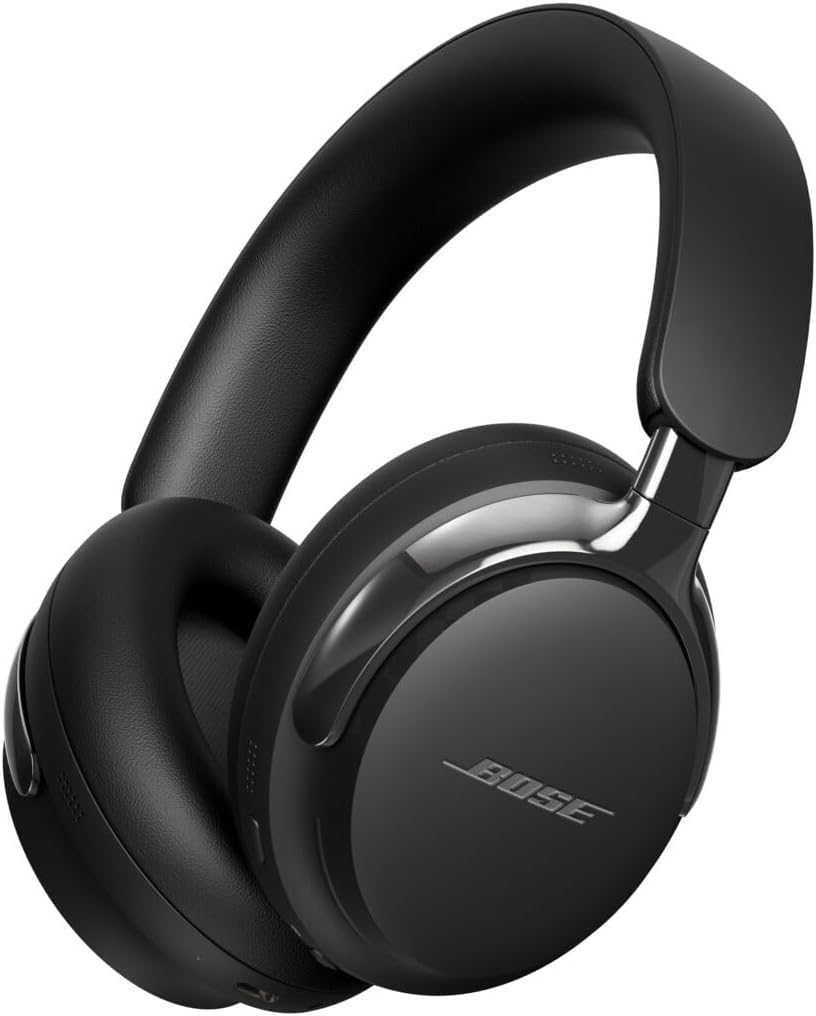
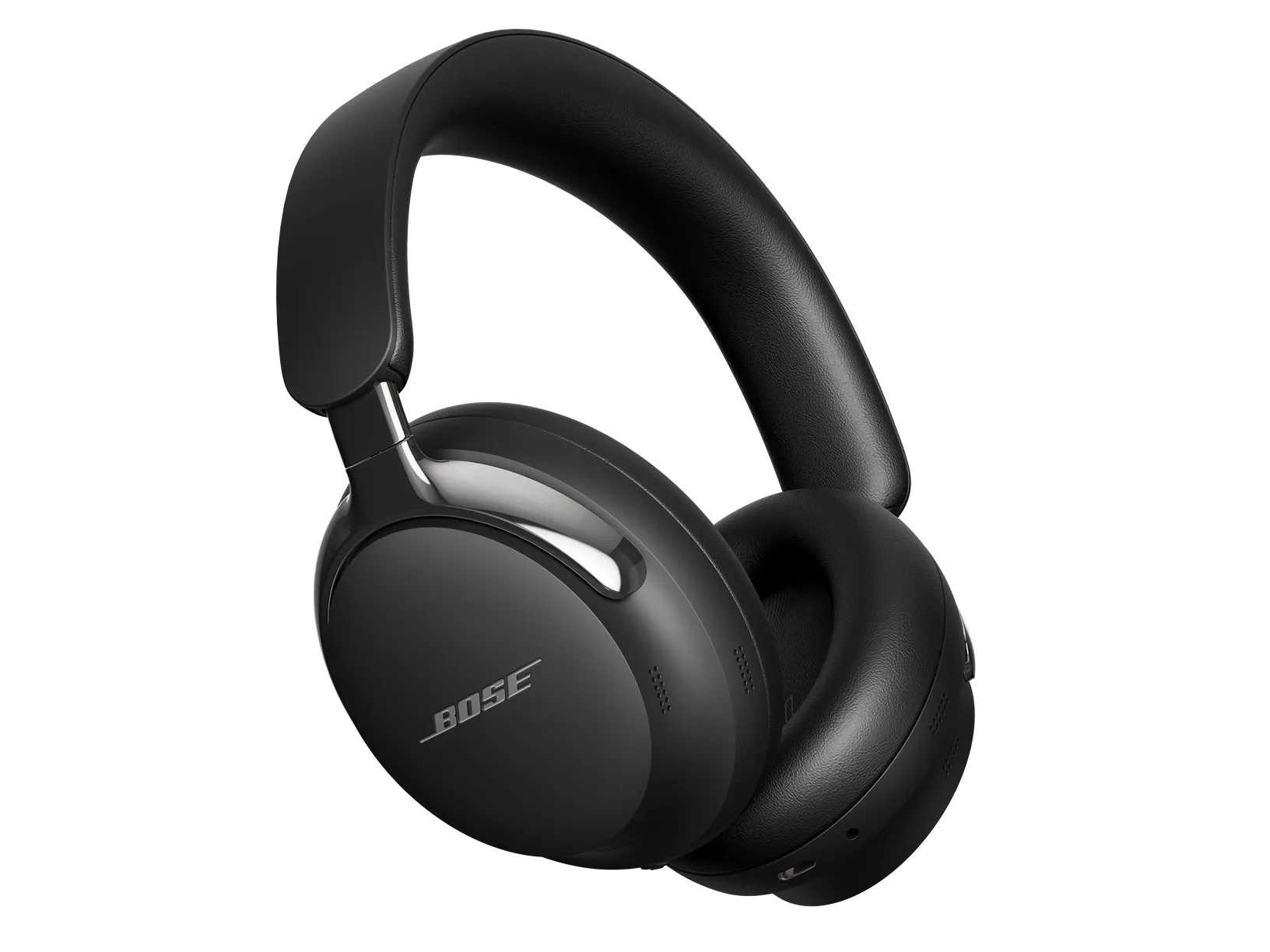
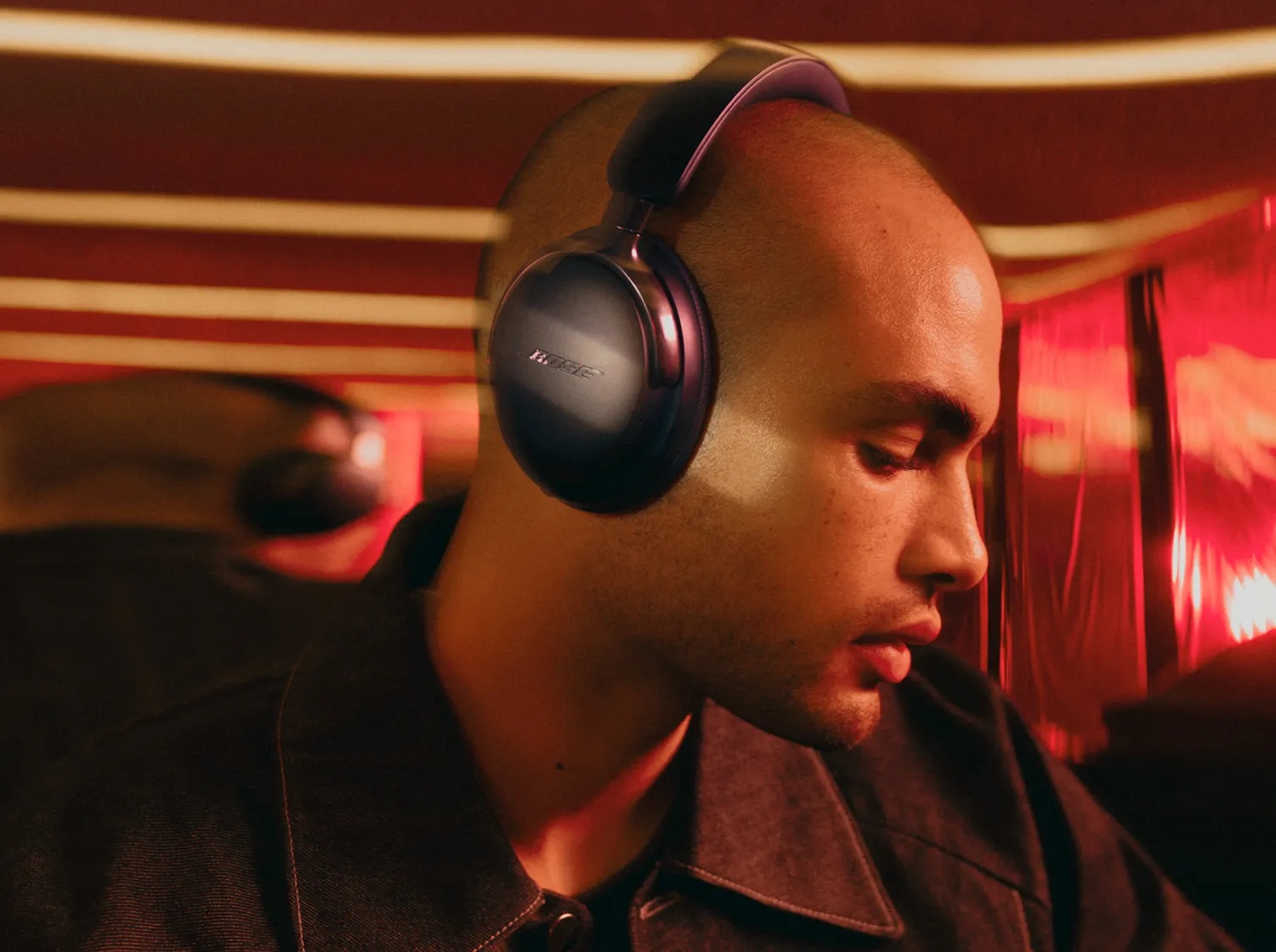
Product photography: Bose / retailer listing images.
- Noise cancelling that reviews consistently rate at or near the top of the category, particularly against high-frequency noise — jet whine, tyre roar, office chatter
- A more detailed, better-imaged sound than the first generation; less of the old Bose smoothing
- USB-C wired audio, and you can charge while listening
- Lay-flat auto-pause and wear detection meaningfully extend real-world battery
- The microphones are disabled entirely on the USB-C wired connection — no calls while wired, at all
- When the battery dies they go completely silent; there is no passive listening fallback
- Call quality is merely average, with a bass-heavy character on the far end
- EQ is limited to three bands, which is stingy next to what rivals ship
This is a pair of headphones aimed squarely at frequent travellers and open-plan workers, and it has two failure modes precisely calibrated to annoy those people: you can't take a call on the cable, and a flat battery gives you nothing at all rather than a wired fallback.
| Battery | Up to 30 hrs ANC / 23 hrs Immersive |
|---|---|
| Weight | 0.583 lb |
| ANC | ActiveSense adaptive |
| Bluetooth | 5.4 |
| Codecs | AAC, SBC, aptX Adaptive |
| Charging | USB-C, listen while charging |
| Quick charge | 15 min = 3 hrs playback |
| Build | Aluminium frame, protein leather cushions |
You take calls all day and want a reliable wired mic as backup. The USB-C mic lockout is not a setting you can change.
The verdict
Buy them for the silence. Do not buy them expecting to work from them on a plane's USB port. At $399 the closest alternative worth weighing is the Sony WH-1000XM6 (~$450), and the honest answer is that the decision comes down to the trade-offs above rather than to any single number.